

🌸 ikigai 生き甲斐 is a reason for being, your purpose in life - from the Japanese iki 生き meaning life and gai 甲斐 meaning worth 🌸
“Go on, just one to celebrate!”
It’s December, again. Two years since I last had an alcoholic drink. One year since I wrote about how never is easier than sometimes. And here I am, at another Christmas party, watching someone with a tray of shots assume we will all partake because celebration apparently requires alcohol.
I smile. I decline. I add a little hehe to soften the edges of my choice because sobriety has a tendency to make others uncomfortable.
As I enter year three, this topic is definitely not about me anymore.
Year one was me and my discovery. The clarity. The sleep. The mornings that felt like gifts. The money saved. The more balanced emotional state (even with the chaos you get with being a woman of a certain age *ahem*). The genuine wellbeing that crept into every corner of my life. And yes, the mental sharpness I need for the impact I want to have on helping others think about their lives and AI’s impact on them.
Year two has been about everyone else’s relationship with my relationship with alcohol.

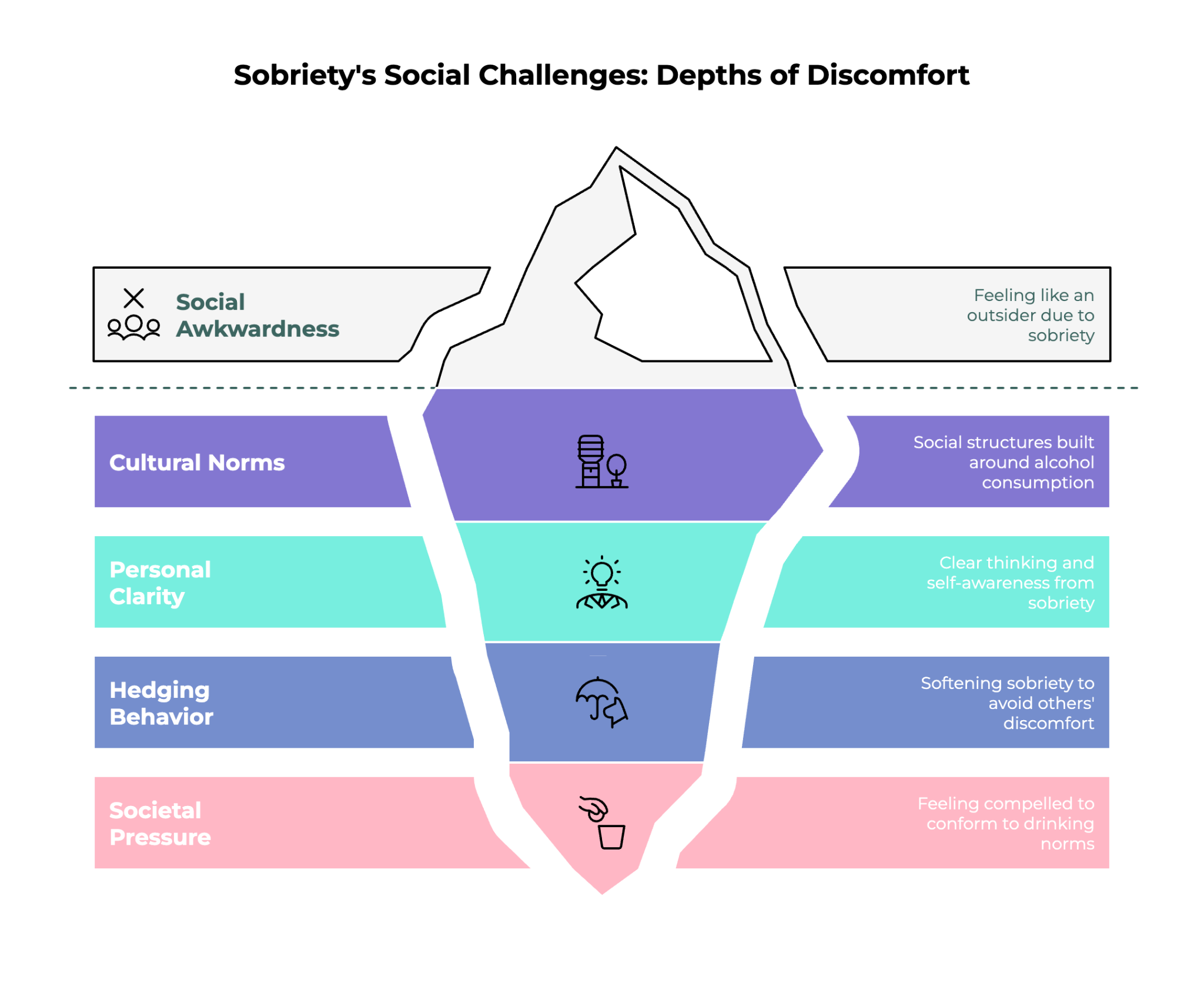
The architecture problem
We’ve built SO many of our social structures around a substance I’ve realised doesn’t serve me. Something undeniably bad for us. And I do mean around. We don’t go out to socialise and perhaps have a drink or two. We go out to drink, and as a side effect we hope to spend relaxed time with people we care about. The substance comes first. The connection may come later.
Someone buys a round without asking. You’re included by default because excluding you would require acknowledging you’re different, and acknowledging you’re different might prompt questions nobody wants to examine on a Friday night. So the glass appears. You decline. You stick out. Every. Single. Round.
“Are you sure? Not even one?”
Hehe. Yes, I’m sure.
I can have a brilliant time without alcohol. I do, regularly. The absence of booze hasn’t diminished my capacity for joy or silliness or deep conversation. But I stick out anyway, because the rounds keep coming and each one asks me to perform my difference again. To reassure everyone that I’m still fun, still relaxed, still one of you...
It’s tiresome in a way hangovers never were.
No matter how carefully you talk about this (and it’s rare that I do) you sound like a grinch. I’m really not trying to be. I’m genuinely happy for people who enjoy drinking and make the health trade offs with open eyes. I’m just... happier for me when I get to drive home clear-headed and comfy in my car instead of having to battle the last bus numpties. When I wake up Saturday morning without fuzzy dread.
Smug face.
Followed immediately by another hehe to soften it, because I’ve learnt that feeling really good makes other people uncomfortable when the choice that got you there holds up a mirror they’re not ready to look into.
The fantasy audit
Very occasionally I think it might be nice to have a Baileys or three whilst wrapping Christmas presents. Or a really lovely bottle of red or two on a date night with Andrew. These thoughts arrive like old friends, familiar and appealing.
Then I pause. I journal. I try to untangle whether I actually want these things or whether I’m just performing what wanting is supposed to look like. Baileys and Christmas wrapping, that’s a magazine spread, isn’t it? Date night wine, romance by cultural prescription.
The longer I go without drinking, the clearer I can see how much of what we think we want is simply what we’ve been told wanting looks like.
When I strip away the societal weirdness and ask myself if it’s worth hurting my body for a brief buzz?
719 days in, and the answer keeps being no so far.
My bullet journal practice earns its keep here… creating space to interrogate these automated thoughts, to trace the difference between genuine desire and cultural programming. The daily practice of writing thoughts or feelings out, seeing it on paper, asking “but is this true?” without the noise of everyone else’s expectations.
Why I hedge
People ask if I’m done forever. If I’ll never drink again.
Last year when I was unsure, I asked myself “when will I be most tempted to drink after this year is up? What needs would I be trying to meet in those moments?”
Hand on heart, there hasn’t been a single moment I’ve been tempted this year. Not one.
I still don’t say never again. I hedge. I say “for now” or “we’ll see” or “I’m not making pronouncements about forever”.
I’ve been journalling about why I do this. I have 719 days of evidence that this choice makes me feel brilliant. Zero moments of temptation. Tangible, measurable, daily proof. Health. Mental clarity. Good sleep. Money saved. Genuine wellbeing radiating into every corner of my life.
So why don’t I claim it fully?
Because I’ve learnt that certainty about not drinking reads as judgement of those who do. The hedge is social lubrication in a world structured around actual lubrication. It’s the softener I add so my clarity doesn’t disrupt your evening. It’s kindness, maybe. Or self-protection. Probably both.
When I don’t hedge… when I say brightly that I feel amazing, that I’ve never slept better or felt more grounded and emotionally sorted… I can see discomfort ripple across faces. Guilt, maybe. Or worry they don’t let themselves admit. Either way, it triggers something. So I’ve learnt to make myself smaller about it. To laugh it off. To add the hehe.
To keep offering wine to other people even though I’ve not touched it in two years, because that cultural programming runs deep enough that I too still perform it on autopilot.
The clarity question
Purpose requires clear thinking.
Not just “not drunk” clear. Actually clear. The kind of clear where you can hold contradictions, see nuances, question your own assumptions, notice the architecture around you rather than just living inside it.
This matters for the impact I want to have and the thinking I still have to do about responsible AI adoption, or trying to articulate the ikigai risk of AI, letting tools do the type of work that used to give us our meaning... I need my brain working properly. I need to be able to see what’s cultural programming and what’s genuine need. To distinguish between what serves human purpose and what just serves convenience.
I can’t afford the fog. Not even the subtle, socially-acceptable fog we’ve normalised.
Our social structures assume that fog. Celebrations demand it. Commiserations require it. Ordinary Fridays revolve around it. When you opt out, you become visible in a way that’s uncomfortable for everyone.
You’re the sore thumb. The exception that proves the rule. The person everyone has to navigate around.
You can’t shout about feeling good because feeling good came from choosing differently, and choosing differently implies everyone else could choose differently too, and that’s a thought nobody ordered with their Merlot.
So you hedge. You soften. You add the laugh.
You make your radical self-care palatable.
What I know now
Two years on and the choice still feels like a choice, but it’s become a really obvious one to make over and over again. It’s genuinely hard to remember why I was ever so intent on consuming something that clearly harms even as it gives us a buzz we crave.
I know that the kind, caring people who assume alcohol is central to gathering aren’t failing. They’re just living inside the same cultural architecture I used to inhabit. I don’t blame them. But I see the architecture now in ways I couldn’t before.
I know that I’m happier. Healthier. Clearer. More myself.
And I know that shouting that from the rooftops upsets people, so I don’t do it too often *grin*
Except here I am, two years in, writing it down anyway. Because maybe year three is about claiming what I know without the softeners. About trusting that my clarity doesn’t have to be lonely, even if it feels that way at this time of year… recognising that feeling really, really good is worth the current social cost of being *that* person and hope that the balance tips one day, because I genuinely wish for others to have this feeling of peace and joy too.
What's a choice you've made that makes you feel brilliant but you've learnt to stay quiet about?
Sarah, seeking ikigai xxx
PS - Some bullet journal prompts for this week, especially as we enter year end reflection and 2026 bullet journal setup time (yay my favourite hehe)
What choices make you feel genuinely good that you can’t fully claim? Why?
Where are you hedging to protect other people from your certainty?
List three things you think you want. Now ask; do I actually want these, or have I been told this is what wanting looks like?
PPS - AI coaching exercise
Then push back on any advice that asks you to make yourself smaller. See what emerges when you refuse to hedge.
PPPS - This week’s music choice
“Sober” by P!nk – “How do I feel this good sober?”
That one line captures why I’m passionate about this, the question probably wasn’t rhetorical for P!nk… genuinely asking how it’s possible. And that’s exactly where I am, feeling really, really good... but somehow that clarity itself feels almost transgressive. The question contains both wonder and the social weirdness of having to justify feeling brilliant without the thing everyone assumes you need to feel that way.
Regarding the topic of the article, your exploration of personal welbeing against deeply ingrained social structures is truly insightful and inspiring; how do you think we can collectively start to subtly redesign these social architectures without creating more discomfort for those navigating a different path?