

🌸 ikigai 生き甲斐 is a reason for being, your purpose in life, from the Japanese iki 生き meaning life and gai 甲斐 meaning worth 🌸
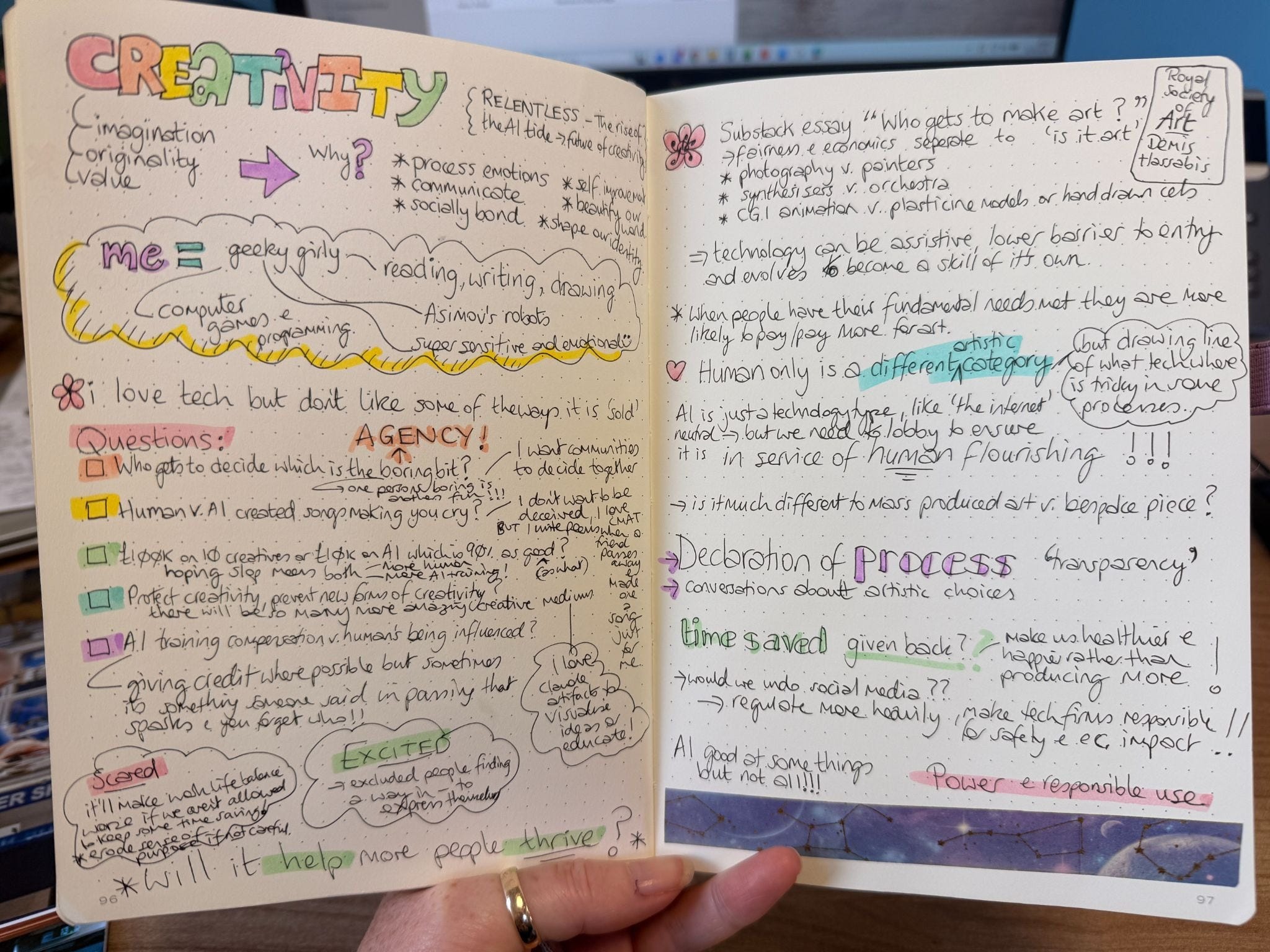
On Tuesday night I sat on an uncomfortable bar stool in Noa Market Hall with a microphone in one hand and my lilac bullet journal open on my lap. CREATIVITY was exuberantly sprawled at the top of page 96 in rainbow pastel lettering above lots of questions, tick boxes, a cloud for what scared me and another for what excited me. AGENCY had earned orange capitals, an exclamation mark and an arrow.
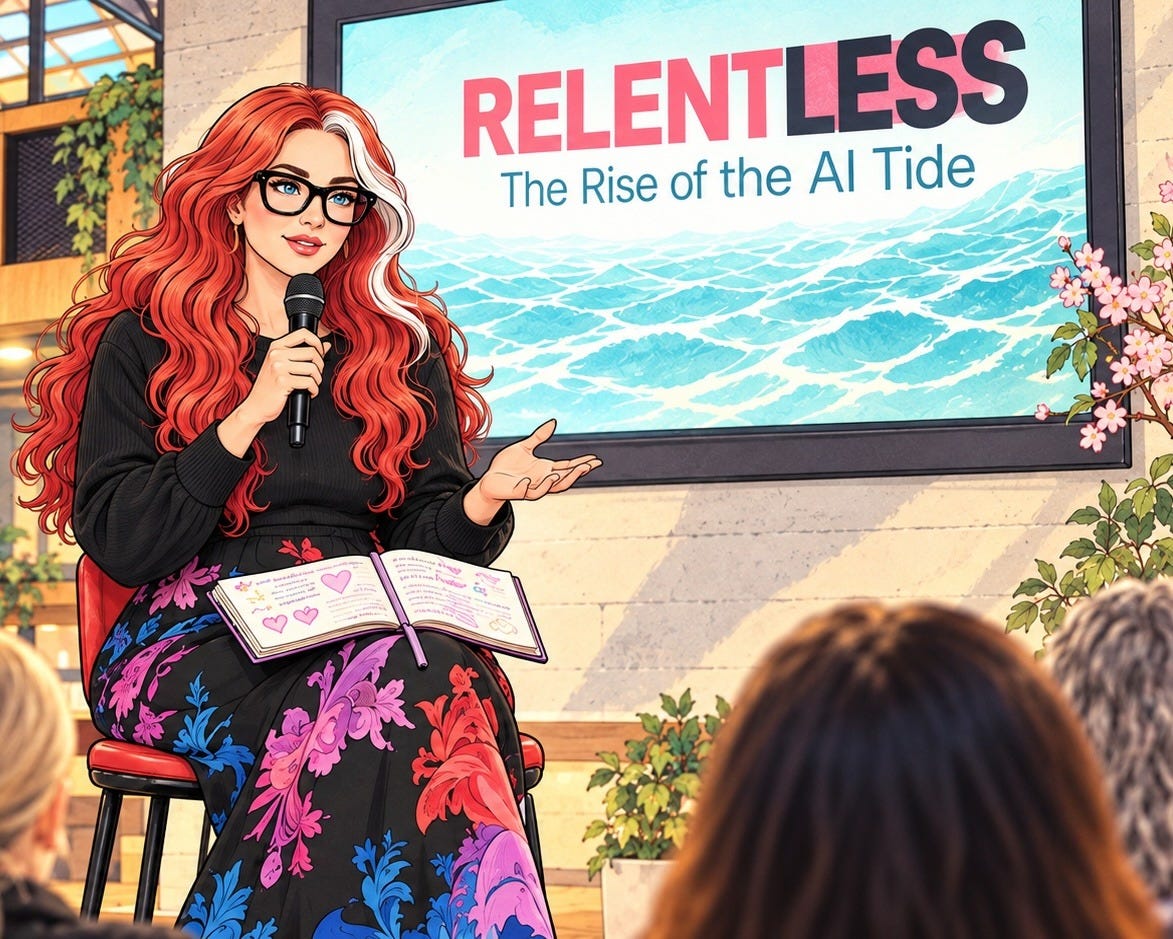
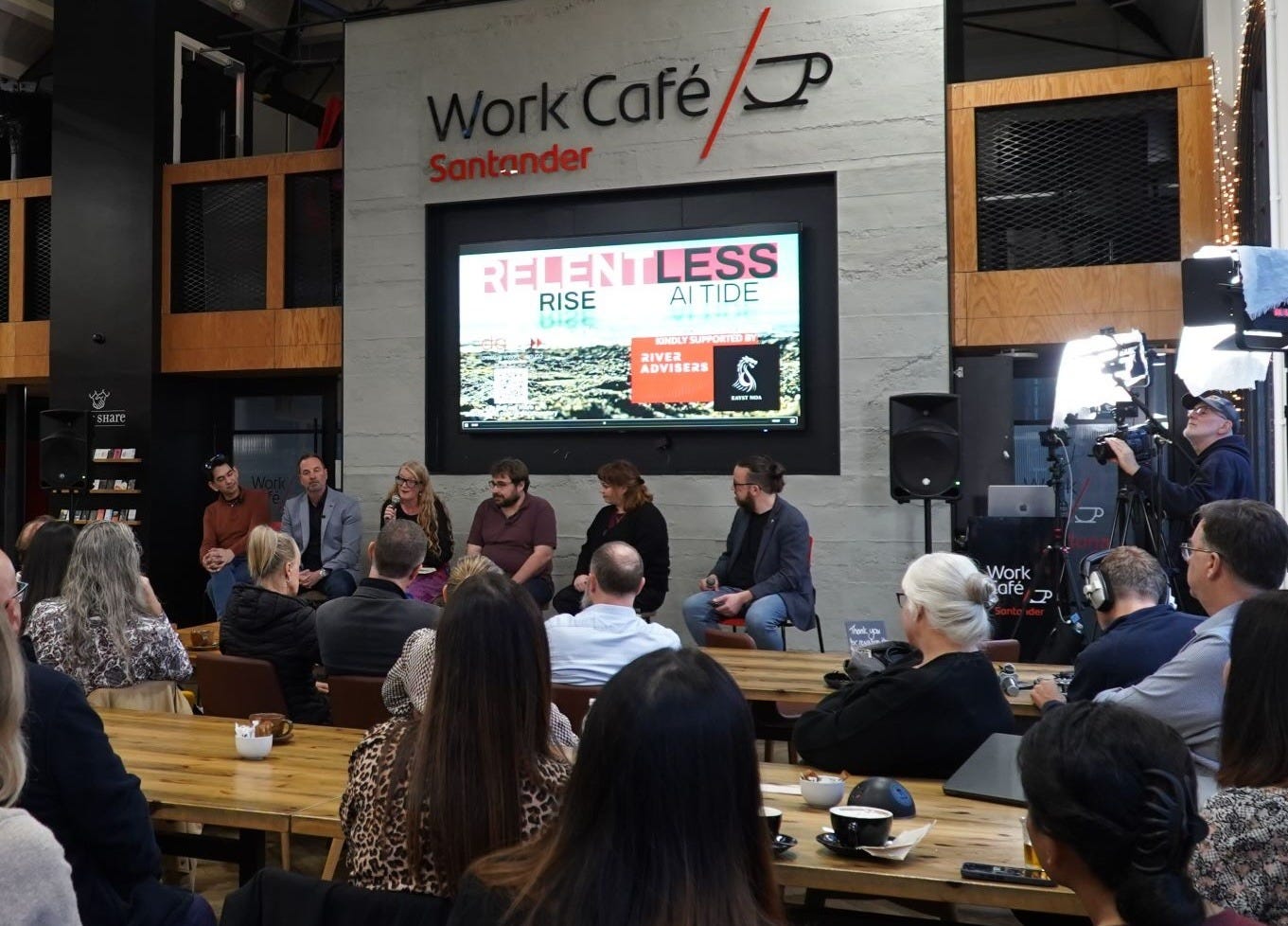
There were cameras on tripods, a room full of faces and a giant screen behind us reading RELENTLESS: The Rise of the AI Tide. Underneath my preparation, a voice in my head was constantly needling that I was there to be the sacrificial lamb.
I use AI every day and very much love it (most of the time). I was about to say so in a room full of creative people, with what I suspected to be, very different feelings about it, on film. My handwritten notes and doodles were going to have to do quite a lot of emotional support work *grin*
Loving AI out loud
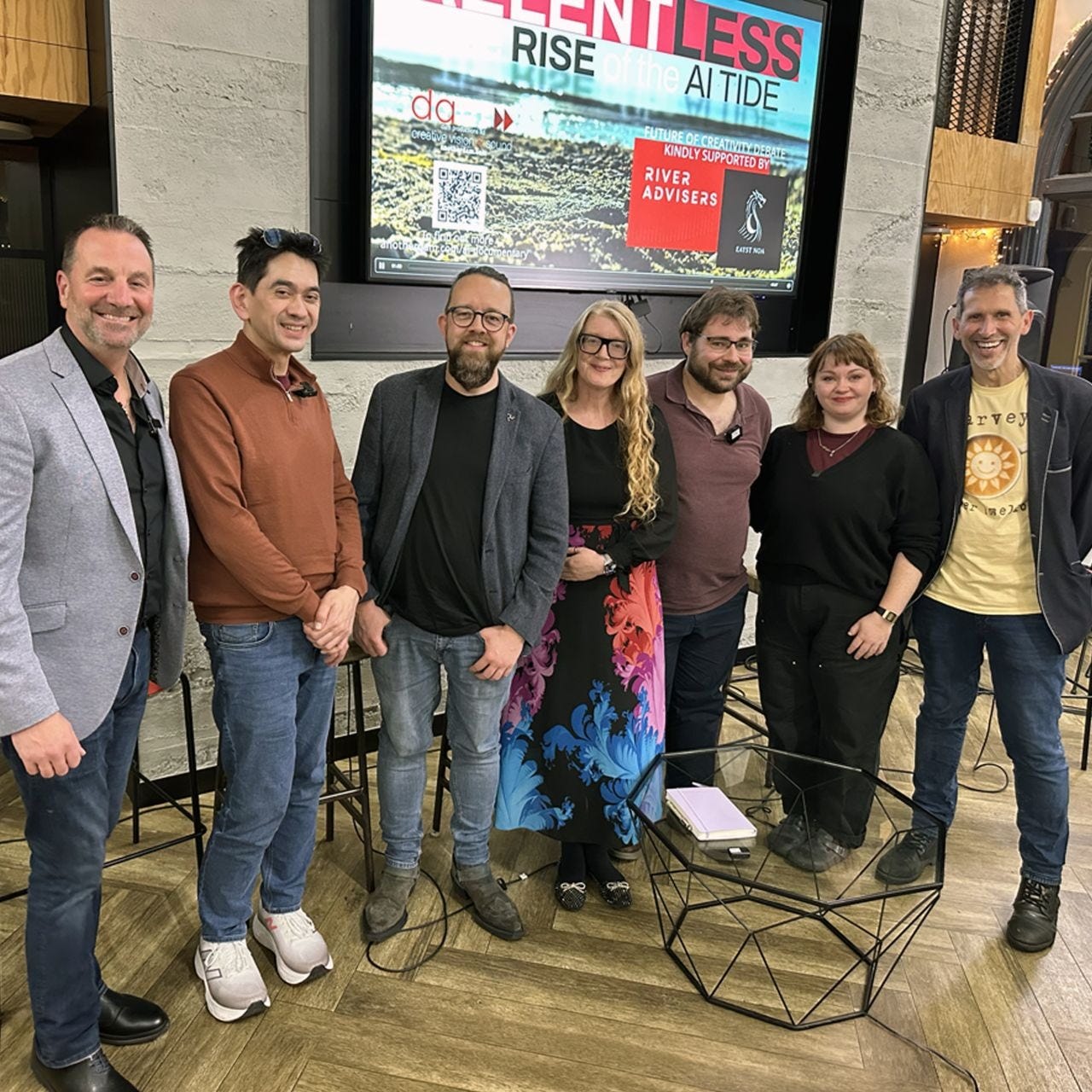
The evening was a live debate about AI and the future of creativity, filmed by Dave Armstrong of DAM Productions for his documentary about our Island and AI. I’d already had the pleasure of being interviewed for it (check out the teaser trailer link for dramatic drone shot of me striding along one of our harbours hehe). This time I was sharing a panel with Dave Artus, Mike Wilson, Cliff Chapman and Quinn Shipton, with Chris Kissack moderating.
Being introduced as an optimist felt a little like having a sign pinned to my dress saying “tomatoes this way, please”. Some of the people around me had very good reasons to be angry or frightened about what AI could mean for their work.
What happened was respectful and fascinating. Chris guided the conversation beautifully, and there was room for disagreement without the evening becoming a contest over who could sound most certain. Dave’s post the next morning opened with “No physical blows exchanged!” I was mostly relieved that I’d been able to bring my complicated feelings into the room and be heard.
I came away so proud of our tiny Island for making safe space for this. People whose livelihoods, creativity and hopes give them different reasons to care, sitting together in a café and sharing openly. I hope the documentary carries some of that feeling to people who weren’t there.
The warmth didn’t settle the difficult questions, but I hope it inspires others to want to keep exploring them together so that we collectively shape our future, including the question underneath so many promises about AI… if it saves us time, who gets to decide what happens to that time?
The geeky girly in the cloud
Near the top of my journal page, inside a yellow cloud, I’d written “me”. Underneath… geeky girly, reading, writing, drawing, computer games and programming, Asimov’s robots… super sensitive and emotional, with a little smiley face to soften my own critique.
That’s the person who gets super excited about AI helping someone bring an idea to life. It’s also the person who worries about consent, livelihoods, bias, environmental costs and who holds the power. My enthusiasm and my fear come from caring about what happens to people.
When I first wrote about the ikigai risk of AI, I reflected on helping build one of the Island’s earliest online communities. I remembered the excitement of connecting people, and wondered, with hindsight, whether I could have done more to anticipate harm. That question still follows me. I know how easy it is to fall in love with what a technology makes possible before properly considering what it might change.
Outside several lovely communities I’ve found, the loudest AI conversations can feel like a choice between passionate rejection and tech bro certainty, with productivity promises and predictions of doom sometimes arriving from the same direction. It can be hard to hear your own questions in all that noise.
I don’t want my enjoyment mistaken for indifference to harm. Equally, I don’t want my concerns dismissed as a failure to understand the opportunity. And I need to offer other people that same generosity. Someone can understand AI and decide they don’t want to use it. Someone can be angry for very good reasons. They still belong in the conversation.
Who gets to decide which is the boring bit?
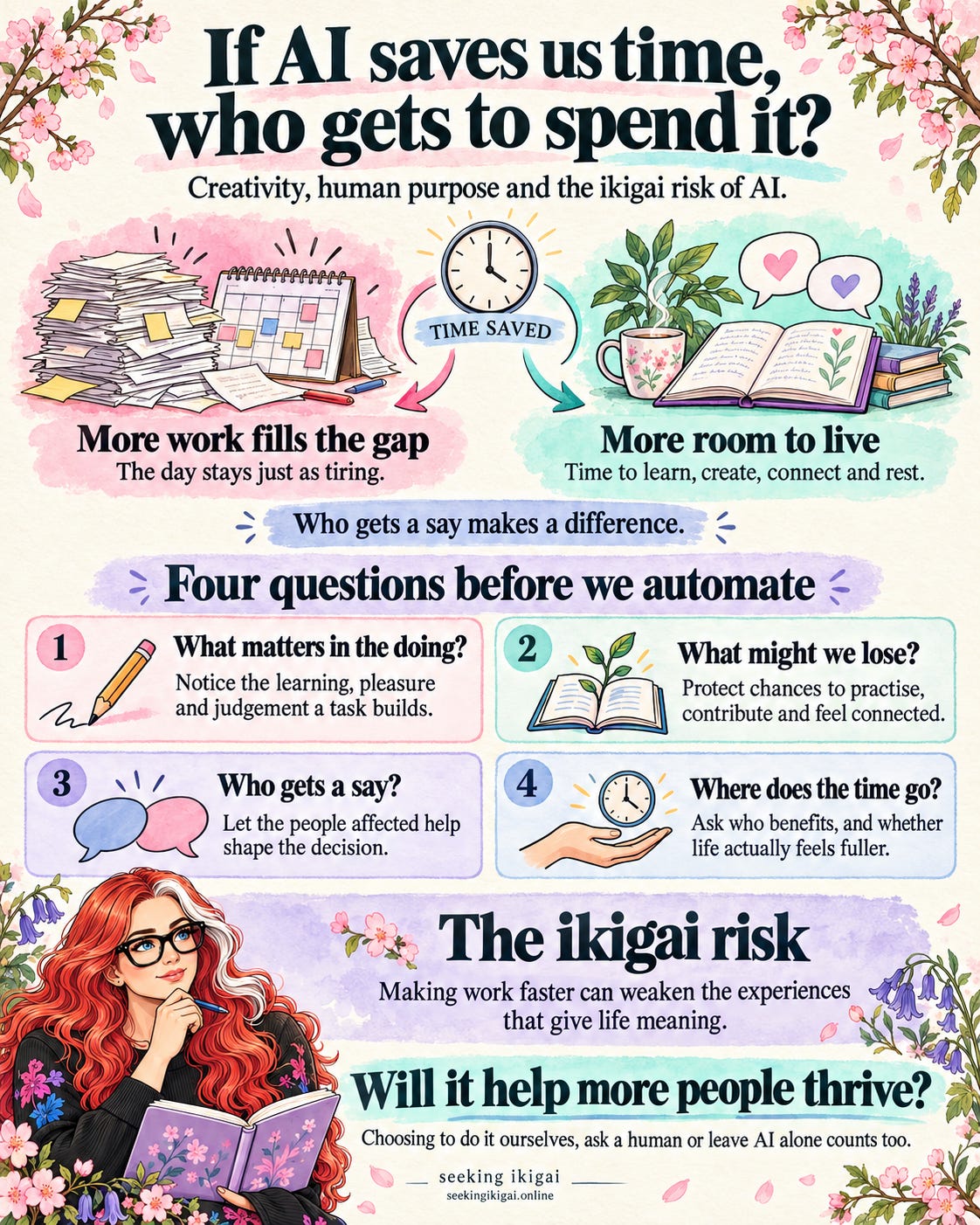
One of the questions Chris sent us beforehand is a theme I’ve explored many times before. We are told that AI will take away the boring work and leave people free to be creative. Lovely, but who gets to decide which bit is boring?
Nobody needed me to hand-letter CREATIVITY in pastel colours. AI could have organised the panel questions into an impressive set of notes for me...but mind mapping my thoughts gave me time to notice where my feelings and arguments didn’t quite line up. I was doing some of the thinking as I wrote, and also enjoying a small way of expressing myself in words and colours, making the notes feel really mine.
There’s a bigger version of this in becoming the person someone asks for help. That lovely moment when a colleague says, “Could you show me how?” or a friend trusts you with an unfinished idea because they value what you might notice. You’ve learned something, and now you get to help.
Getting there involves being a beginner at some point, there’s no shortcut to gaining that trusted taste. Trying, asking, making mistakes and gradually developing judgement. Some of those earlier stage tasks may look like obvious things to automate. They may also be where someone gets the practice that helps them become confident and capable. If we remove those opportunities, how will we help the next person learn?
This is an aspect of what I mean by the ikigai risk of AI. The possibility that, while making things faster and easier, we weaken some of the experiences through which people find meaning. Learning, expressing ourselves, contributing, being recognised and feeling connected can matter enormously, even when they don’t appear in the calculation of time saved.
I’m frightened of a future in which we become even better at producing things people don’t really need while giving too little thought to how people find their place and sustainably thrive. And I’m hopeful because AI could help someone find theirs… understand an idea, express something they’ve struggled to say, begin a project or discover an ability they didn’t know they had.
I don’t want to romanticise difficulty or suggest that needing assistance makes an achievement less yours. I want to know whether the help gives you more room to learn, choose and enjoy what you’re doing. Nor should being useful become another condition we place on belonging. We deserve care and pleasure when we have nothing left to give.
Caution has something to teach us
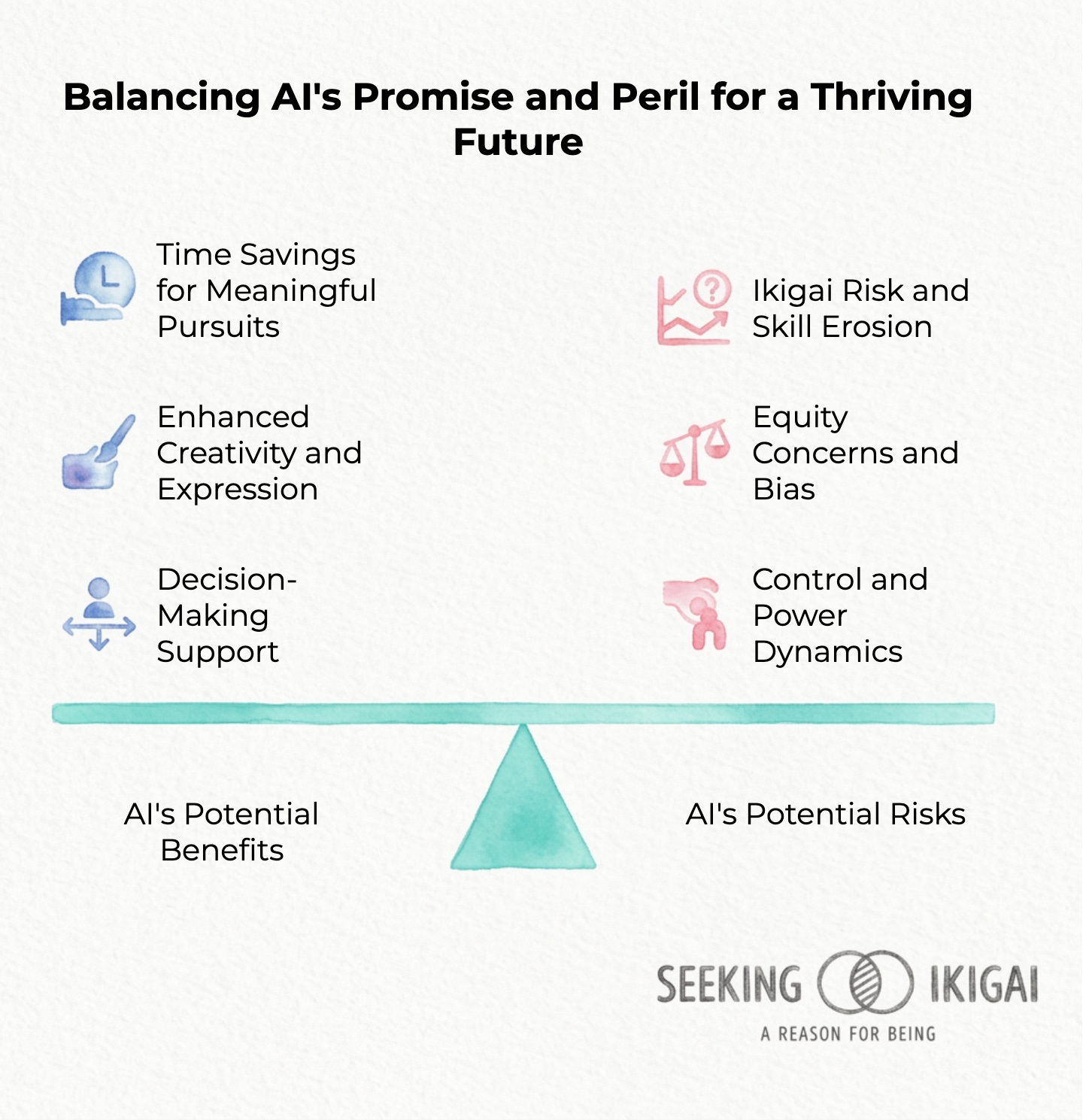
Who gets to feel hopeful about AI also depends on who gets to shape what happens next. If you’ve had to work especially hard to be heard, paid fairly or taken seriously, yet another promise of progress deserves careful examination. I don’t want people to confuse that experience with a lack of imagination. It’s really hard to feel hopeful when you’ve repeatedly experienced the sharp end of inequity.
Research reviewed by Harvard Business School’s AI Institute describes women’s concerns that using AI will be seen as cheating or a sign of lower ability. It also reports research in which identical AI-assisted work received lower competence ratings when attributed to a female engineer. Confidence is hardly the thing that needs fixing there.
Mara Bolis, writing in the Stanford Social Innovation Review, uses the phrase fierce ambivalence which I adore… welcoming what AI can make possible while demanding fairness, transparency and safety. That feels close to the combination I’m trying to live with, enthusiasm with expectations attached.
The conversations I value in She Writes AI, the Isle of Man AI Community of Practice, the AI Lyceum, The AI Social and Women of AI give those mixed feelings room. I can be excited about a technology or tool AND worried about its consequences. Tuesday’s panel brought that possibility into a wider public space, including people whose experience of AI differs from mine.
I’d love us to make that a habit. Before changing someone’s working day, ask what they value about it. Before removing a junior task, ask how the learning will happen. Before describing someone as resistant, ask what they’re worried about losing. Then give their answers enough weight to influence the decision.
The time has to help us thrive surely?
There’s another question in my notes “time saved, given back?”
If every hour saved fills immediately with more work, the person doing it may never get the calmer day they were promised. The benefit will show up somewhere else, while they finish the week just as tired. That needs decisions from employers and the people building and selling these systems as well as communities and Governments, it cannot be solved by individuals learning to prompt more cleverly.
What would I like the time for? Enough patience left for a proper conversation. The energy to write something I care about. Learning something because it interests me. Helping someone without feeling I’m stealing time from something else. An evening that doesn’t need to justify itself by becoming an achievement. Time to exercise, enjoy nature and eat healthier food.
Saving time becomes progress when people have more room to live meaningfully, and a real say in what changes. That is the direction I want to keep exploring here. Alongside the risks, I want to look for the uses that make a life feel fuller… a little more confidence, a creative door opening, a task becoming manageable, enough energy left for something lovely.
That also means paying attention when the answer is to do something ourselves, ask another human or leave the tool alone. The point of seeking ikigai is to notice what makes life worth living. I want my experiments with AI to help answer that.
More rooms like this
A conversation in a café doesn’t resolve questions of consent, employment or accountability… but it gives us a chance to understand what matters to the people affected, and to ask better questions of those making decisions.
I’m grateful to Dave for making the documentary and creating space for this evening, to Chris for guiding it, and to my fellow panellists and everyone who came along. I hadn’t needed everyone to agree with me. I’d needed enough room to say what I thought, listen properly and keep thinking… for us all to respect each other and connect in real life a little more.
Among all the doodles in my journal, I wrote “Will it help more people thrive?” Looking back, that question belongs to the whole evening. I want more people to get a say in the answer, including the people who are frightened or angry, the people who are curious and the people who haven’t been asked yet.
I’m the geeky girly with the coloured pens, still excited AND worried. But sitting on that stool gave me something hopeful, the experience of a difficult conversation that I wanted to continue. I’m proud of our Island for helping make it happen. For all my talk about saving time, that evening felt like a very good way to spend some of it.
What would you like AI to make more room for in your life, and what would you want it to leave in your hands?
A declaration of process… this essay began with a hand-drawn spread in my journal through to real life conversations and interviews, human braindumping of thoughts and fears which grew through conversations with Claude and ChatGPT and then were taken into Google docs for lots of rewriting and editing before publishing in Substack. All of the experiences and values are mine, as are most of the words… and I’m definitely responsible for what I publish.
Sarah, seeking ikigai xxx
PS ✍️ for the bullet journallers
Choose a task you might use AI to help with. Write it at the centre of a mind map spread, then around the outside consider what you and your team learns or enjoys in the doing. Underneath you could draw out the steps and highlight which could or couldn’t be done by AI. Estimate how much time might be saved and write about what you would like the saved time or energy for.
At the very bottom, add Who else does this affect, and have they had a say? If it’s a team decision, take the page into a conversation and let the answers change the plan.
PPS 🤖 an AI prompt to try
“I’m considering using AI to help with [task]. Ask me one question at a time about what I find draining, what I enjoy or learn through doing it, who else is affected, and what I would like any saved time or energy for. Don’t assume using AI is the best outcome or that my caution needs fixing. Base your reflection on what I tell you, and flag anything uncertain. Then help me choose one small, reversible experiment, which could include doing it without AI. Suggest how I could notice whether it leaves me with more understanding, confidence, connection or enjoyment, as well as saving time. Help me identify whose input I need before changing anything that affects other people.”
PPPS 🎶 Today’s soundtrack
Two Tribes by Frankie Goes to Hollywood. A suitably dramatic soundtrack for the loudest corners of the AI debate, and a little Gen X energy for your weekend. The title fits the pressure to pick a side that you often feel on this topic, or any other topic for that matter due to shouty social media. The evening reminded me how much more interesting people become when we give them room to be complicated and find ways to move forward together.